
Overview
Click on the image below for an overview of the model:
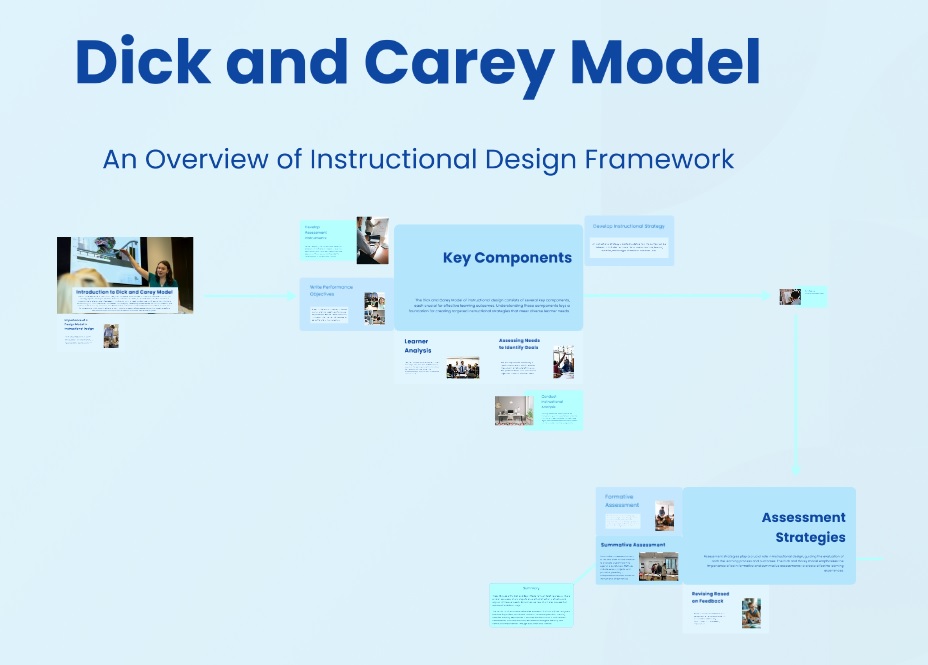
Implications for Instructional Design
Because of its structured and systems-based approach, the implications of the model are significant:
Comprehensive Process Orientation: This model emphasizes a step-by-step process that ensures all aspects of instructional design are addressed, from needs assessment to evaluation. This leads to a more organized and thorough design approach.
Reductionist and Measurable: By breaking down instruction into smaller components, the model allows designers to focus on specific, measurable learning objectives. This focus on outcomes is critical to ensure that the instruction effectively meets learners’ needs and that performance can be reliably assessed.
Iterative and Flexible: The model is iterative, incorporating opportunities for formative evaluation and revision throughout the process. This allows for adjustments to be made as necessary, leading to continuous improvement and adaptation of instructional materials.
Learner-Centered Design: A core aspect of the model is the emphasis on analyzing learners and their context, ensuring that instruction is tailored to their needs, knowledge levels, and learning environments. This creates more effective and relevant instruction.
Applicable Across Various Theories: The model is epistemologically neutral, meaning it can be applied to different learning theories (behaviorism, cognitivism, constructivism), making it flexible for various instructional contexts and philosophies.
Strengths and Limitations
The Dick and Carey model is a solid and organized approach to instructional design, but it’s important to consider both its strengths and potential limitations. It requires more complexity and resources, so it’s essential to weigh that against your project’s needs. Make sure to evaluate if this model fits your instructional goals and project constraints.
Here are some the model’s strengths:
Systematic and Structured Approach: The Dick and Carey model’s step-by-step, systematic approach ensures that all aspects of instructional design are carefully analyzed and organized, which contributes to well-structured instructional materials focused on achieving specific learning outcomes.
Alignment: One of the model’s strengths is the close alignment between instructional goals, objectives, assessments, and materials. This ensures coherence and clarity for learners, allowing them to clearly understand how the learning content relates to assessment.
Iterative Design: The model supports an iterative process that allows for continuous refinement. Designers can gather feedback during formative evaluations and revise instructional materials to improve their effectiveness.
Flexibility: Although structured, the model is flexible and can be adapted to different learning contexts, educational levels, and subject matters. Its process can accommodate various instructional technologies and approaches, such as behaviorism, cognitivism, and constructivism.
Data-Driven: The model emphasizes measurable learning outcomes and relies on data collected from formative and summative evaluations to ensure the instruction meets its objectives.
And here some of its limitations:
Complexity: The model’s ten-step process can be overwhelming, particularly for novice instructional designers. It requires a detailed, often time-consuming approach to each phase of instructional design, which may delay project timelines.
Resource-Intensive: Implementing the Dick and Carey model may require significant resources, such as access to subject matter experts, technology, and comprehensive assessment tools. This can be challenging for smaller organizations or teams with limited resources.
Overemphasis on Analysis: Similar to the ADDIE model, the extensive focus on analysis and upfront needs assessments can prolong the design phase, which may not be ideal for time-sensitive projects. The emphasis on detailed analysis may also be unnecessary for more straightforward or agile instructional needs.
Not Ideal for Rapid Development: The model’s structured and systematic nature may not be suitable for fast-paced projects that require rapid instructional design, as it can feel overly prescriptive. Agile or rapid design models may be a better fit for projects requiring flexibility and quicker turnarounds.
 Better Learning Design