
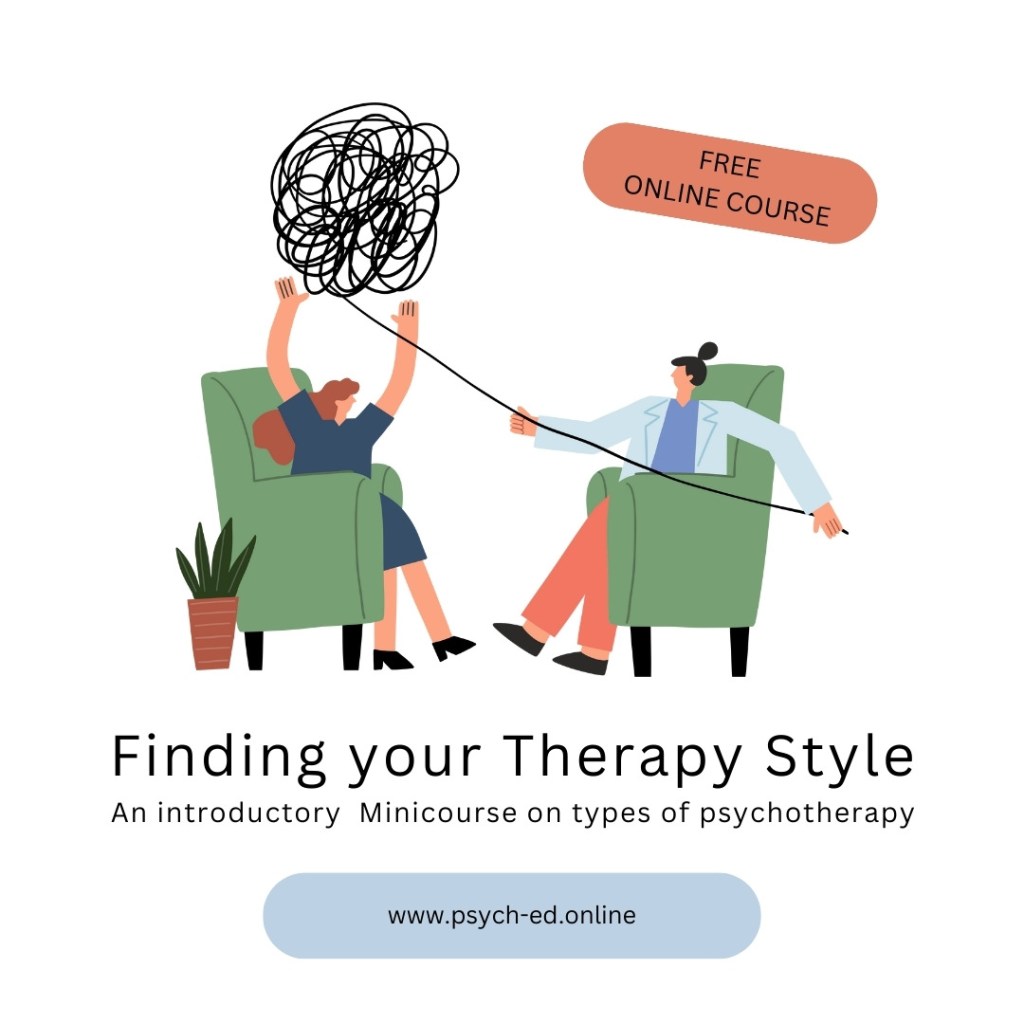
Overview
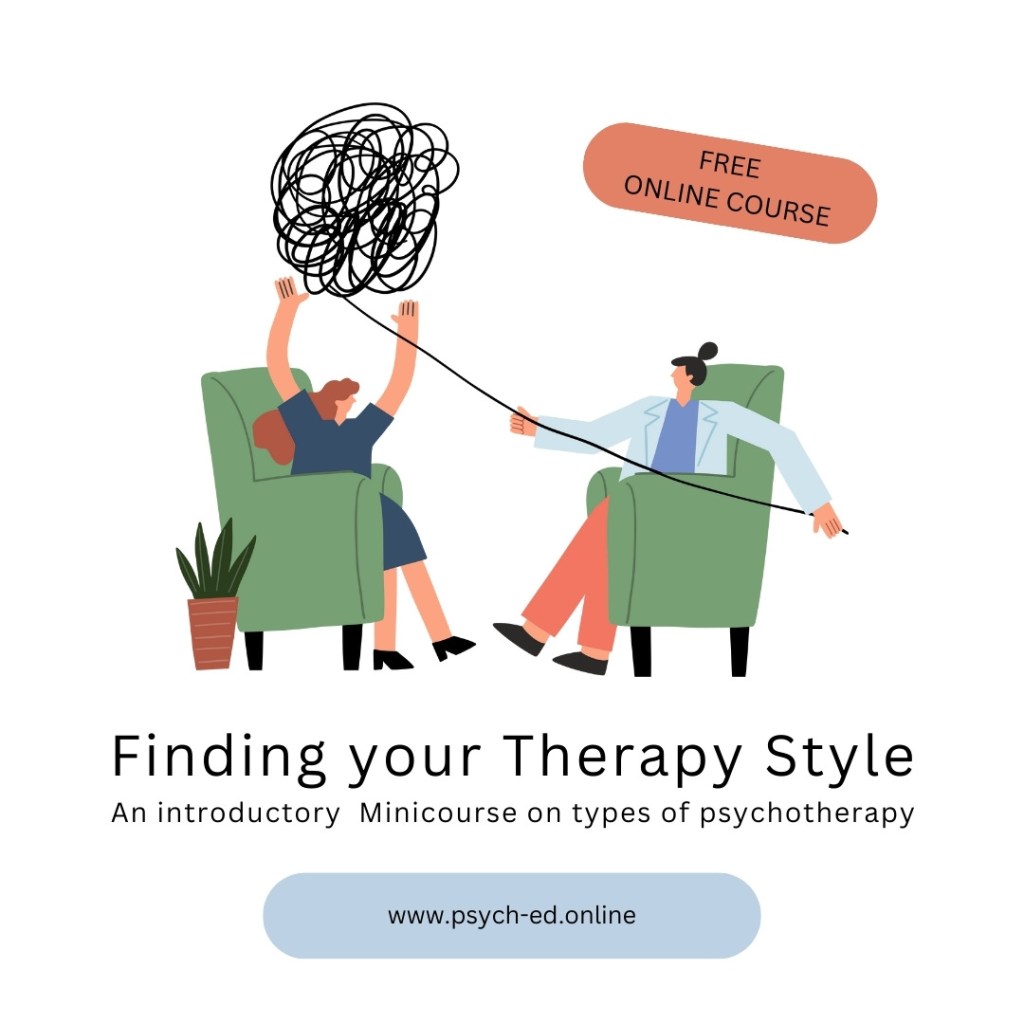
In this introductory minicourse on types of psychotherapy, participants will learn about directive and non-directive forms of psychotherapy and their implications for therapy sessions. The course will introduce and explore some of the most common forms of therapy and categorize them into two main types. The minicourse aims to help participants understand some of the therapeutic implications of each type and get a sense of what to expect during the therapy session.
Learning Gap
A significant learning gap exists for individuals seeking psychotherapy sessions who are unfamiliar with the process or the terminology used to describe different types of therapy. Many prospective clients may not know what to expect during their sessions, including the structure, goals, or their role in the therapeutic process. They might struggle to understand the various therapeutic approaches listed on a provider’s site—such as cognitive-behavioral therapy (CBT), psychodynamic therapy, or humanistic therapy—and how these approaches differ in terms of techniques, goals, and suitability for their specific issues.
This gap can lead to confusion, unrealistic expectations, or even reluctance to begin therapy, as individuals may feel unprepared or overwhelmed by the complexity of choices and the unknown aspects of the therapeutic process. Filling this gap requires clear, accessible information that demystifies the therapy process and explains the different types of therapy in relatable terms, helping clients make informed decisions about their mental health care.
I believe that offering a simple, introductory minicourse that contextualizes most common therapy forms into directive and non-directive therapies could help fill this gap.
Target Audience
The primary audience for this minicourse consists of members of the general public who are curious about starting psychotherapy but have little to no prior knowledge about what it entails. These individuals may come from diverse backgrounds, varying widely in age, socioeconomic status, and educational levels. They share an interest in mental health and well-being, seeking clarity and support before committing to therapy.
Demographics
Age range: Primarily adults aged 18–85
Gender: All genders
Education: High school to college level education with basic computer skills and internet access
Socioeconomic status: Upper-middle to lower-middle class
Occupations: Varies, including students, working professionals, and retirees
Language: English
Geographic: Urban and suburban areas where access to mental health services is relatively common
Background
The majority of learners will likely have minimal to no formal education in mental health or psychotherapy. They may have some awareness of the general concept of therapy through media, but lack understanding of specific therapeutic methods, processes, or expected outcomes. Some may have prior experiences with counseling or emotional support services, but many will be first-time therapy seekers. Other learners may have had therapy sessions but felt that their needs weren’t addressed so they keep searching for alternatives.
Skills and Dispositions
As the minicourse will be hosted online, learners are likely to possess basic digital literacy skills (navigating websites and using online platforms). They may also have basic interpersonal and communication skills, though many may seek therapy to improve these areas.
Most learners will approach the minicourse with a sense of curiosity and openness but may also feel apprehensive or anxious about therapy due to common misconceptions or stigma around mental health care.
This learner profile will help guide the development of accessible, non-technical, and reassuring content, ensuring that all learners, regardless of their prior experience, feel comfortable engaging with the material.
Course Parameters
Learning Objectives
- Knowledge-based: By the end of this minicourse, participants will be able to define and describe key psychotherapy concepts, including the different therapeutic approaches (e.g., cognitive-behavioral therapy, psychodynamic therapy, humanistic therapy) with 80% accuracy. They will know at least 3 main differences between directive and non-directive therapy sessions.
- Application-based: By the end of this minicourse, participants will be able to evaluate and select a suitable type of psychotherapy based on their particular preference, demonstrating at least two reasons for their choice.
Course Type
This will be an informational course as it will provide information about different types of therapy modalities. It aims to encourage participants to reflect on their personal situations and preferences related to problem-solving and communication.
Modality
This minicourse will be an asynchronous online course, giving participants the opportunity to learn at their own pace without any real-time interaction. Since I’m reaching out to an audience who is looking for therapists online, I can assume basic computer and web literacy and accessibility. I won’t need to track participation or completion, so the materials will be available freely online. Participants will not have to create an account or provide personal information to access the course. I will likely create self-containing videos that can be posted to YouTube and other social media sites.
Learning Activities
Lectures and Presentations: Provide foundational knowledge on key psychotherapy concepts like different therapeutic approaches (e.g., CBT, humanistic therapy) through video recordings and other pre-recorded materials.
Case Studies: Provide problem-based learning where learners review hypothetical therapy scenarios and identify suitable treatment approaches.
Multiple Choice Quizzes: Periodic quizzes with instant feedback to reinforce key concepts, such as identifying the correct therapy approach for a given scenario.
Infographics: Learners create visual representations of therapeutic models or processes, which helps deepen understanding through creative engagement.
Instructional Design Model
I believe that for this psychotherapy minicourse, the Backwards Design (UbD) model would be highly effective. This model begins with identifying desired learning outcomes, which is ideal for helping learners achieve clear, measurable objectives like understanding different therapeutic approaches and their applications. By starting with the end goals, such as specific insights about available psychotherapy modalities, and then working backward to design assessments and learning activities, UbD ensures a cohesive and purposeful course structure. This model promotes transfer of knowledge, which is critical for applying psychotherapy concepts to real-life scenarios.
Goals and Objectives
By the end of this course:
CLO 1: Learners will be able to describe and differentiate key psychotherapy modalities and group them according to directive or non-directive modalities.
Learning Objectives
- Learners will be able to differentiate between directive and non-directive modalities from a list of the five most commonly used therapy forms.
- Learners will be able to identify three most common characteristics of these five commonly used therapy forms.
Activities
- Several short video presentations describing commonly practiced therapy forms.
- Multiple choice quiz reinforcing the most important concepts and characteristics.
CLO 2: Learners will be able to select appropriate psychotherapy techniques depending on their personal preference.
Learning Objectives
- Learners will be able to assess their personal preferences and select a suitable psychotherapy modality, providing at least two justifications for their choice based on the unique features and implications of each approach discussed in the course.
Activities
- Watching recorded therapy sessions and identifying which modality has been used (multiple choice quiz).
- Reflecting on individual preferences for problem solving and matching those with a likely match of a therapy approach (guided interview/ survey/ logic tree that takes the learner on a journey through their personal reflections and matching therapy forms).
Course Outline
- Course Introduction:
- Video presentation on what to expect and course overview
- Differentiate broadly between directive and non-directive therapies
- 1-3minutes
- Benefits of Therapy – Setting Expectations and the Importance of the Therapeutic Relationship:
- Video presentation of what therapy can and can’t do
- 3-5min
- Include Infographic
- Cognitive Behavior Therapy (CBT):
- Video presentation on the basics of CBT.
- 3-5 minutes
- Multiple choice quiz (3-5 questions reviewing basic content, no answer limit)
- Applied Behavior Therapy (ABA):
- Video presentation on the basics of ABA.
- 3-5 minutes
- Multiple choice quiz (3-5 questions reviewing basic content, no answer limit)
- Rational Emotive Behavior Therapy (REBT):
- Video presentation on the basics of REBT.
- 3-5 minutes
- Multiple choice quiz (3-5 questions reviewing basic content, no answer limit)
- Psychodynamic Therapy:
- Video presentation on the basics of Psychodynamic Therapy.
- 3-5 minutes
- Multiple choice quiz (3-5 questions reviewing basic content, no answer limit)
- Existential Therapy:
- Video presentation on the basics of Existential Therapy.
- 3-5 minutes
- Multiple choice quiz (3-5 questions reviewing basic content, no answer limit)
- Person-Centered Therapy:
- Video presentation on the basics of Person-Centered Therapy.
- 3-5 minutes
- Multiple choice quiz (3-5 questions reviewing basic content, no answer limit)
- Other, less common and multi-modal approaches:
- Video presentation.
- 3-5 minutes
- Multiple choice quiz (3-5 questions reviewing basic content, no answer limit)
Subject Matter Experts/ Resources
- American Psychological Association: https://www.apa.org/
- The American Psychological Association (APA) website offers a wealth of resources, including access to peer-reviewed journals, research articles, and guidelines that can enhance your understanding of psychological theories and practices. It provides up-to-date information on best practices, ethical standards, and evidence-based approaches, which are essential for conducting thorough and informed research in psychology.
- CrashCourse YouTube Channel
- The CrashCourse YouTube channel offers engaging and accessible videos on psychology that can provide a solid foundation for understanding key concepts and theories. These bite-sized lessons make complex ideas easier to grasp, aiding in retention and comprehension. Additionally, the channel often includes references to further readings and research, making it a valuable starting point for deeper exploration into psychological topics.
- Psych Hub YouTube Channel https://www.youtube.com/@PsychHub/videos
- The Psych Hub YouTube channel offers informative videos that break down various psychological concepts, mental health issues, and therapeutic techniques, making them easy to understand. Its focus on evidence-based content and expert interviews provides reliable information, while the visual format can enhance retention. This resource can be particularly helpful for researchers seeking to clarify concepts or gather contemporary insights in psychology and mental health.
- Prochaska, J. O., & Norcross, J. C. (1994). Systems of Psychotherapy: A transtheoretical analysis (3rd ed.). Thomson Brooks/Cole Publishing Co.
- Abstract from the authors: This book provides a systematic, comprehensive, and balanced survey of the leading theories of psychotherapy. It is designed, however, to be more than just a survey, since we strive toward a synthesis both within each system and across the various systems. Within a particular system of therapy, this book follows the integrative steps that flow from the system’s theory of personality to its theory of psychopathology and culminates in its theory of the therapeutic process and therapeutic relationship.
Digital Media
 Better Learning Design